News
皆様、新年あけましておめでとうございます。丹野めぐみです。
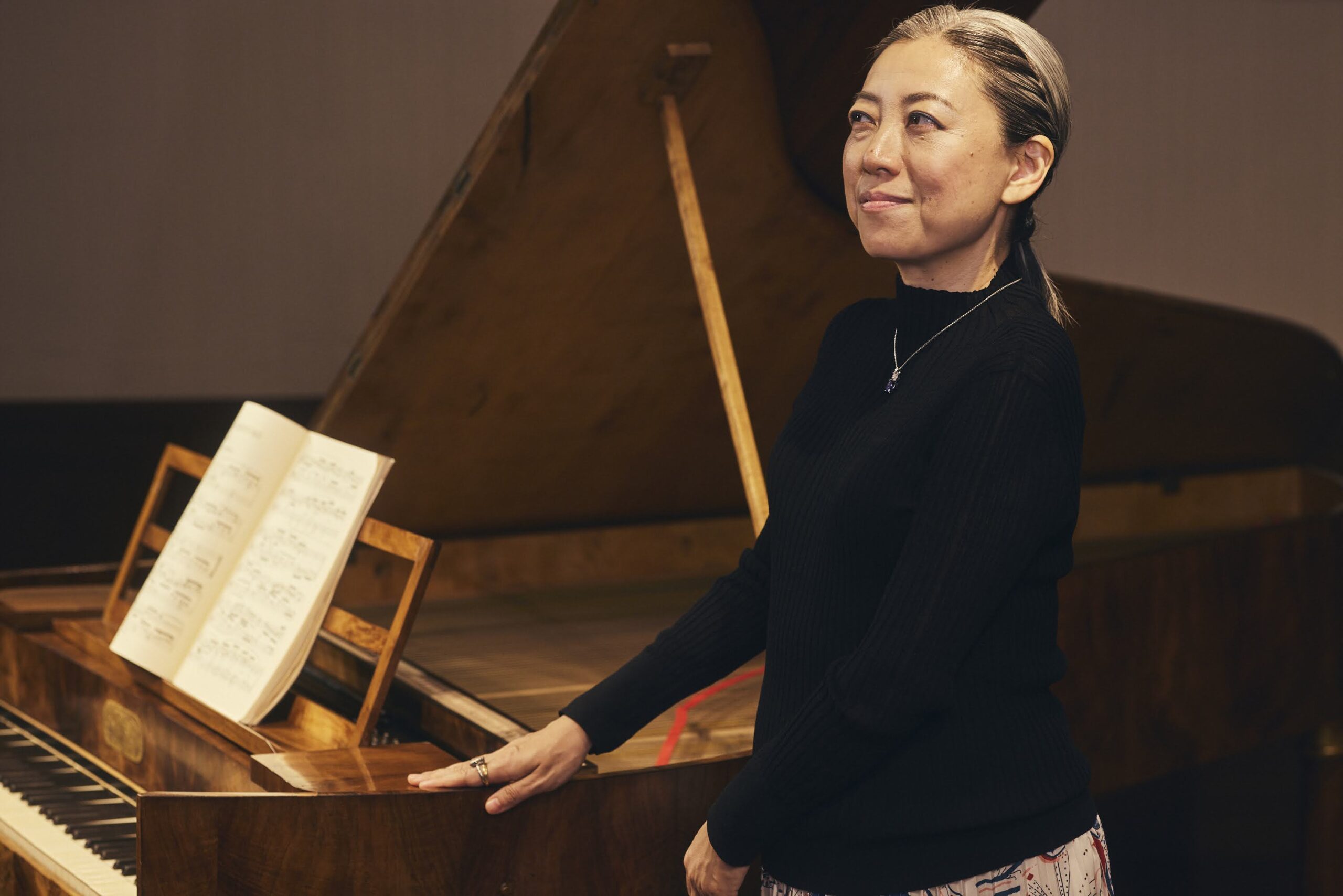
2026年の幕開けに、1825年ウィーン製のオリジナル・フォルテピアノで、メンデルスゾーンの『無言歌集』より「デュエット(作品38-6)」をお届けします。
Liebhaber(音楽を愛する者たち)へ
メンデルスゾーンは生涯を通して、まるで日記を書くように数多くの「無言歌」を作曲しました。実は、現在私たちが知っている曲名の多くは、出版業者が楽譜を売りやすくするために後から付けたものです。 当時のドイツには「Liebhaber(リープハーバー=音楽を愛する者)」と呼ばれる、家庭で音楽を嗜む豊かな文化(ハウスムジーク)がありました。想像しやすい情景のタイトルは、彼らにとって親しみやすいものだったのです。
しかし、この「デュエット」は例外です。数少ない、メンデルスゾーン自身が明確な意図を持って名付けた作品の一つです。
平行弦が描き出す、魂の交差
「デュエット」という名の通り、この曲には力強い低音(男性の声)と、愛に満ちた高音(女性の声)の2つの声が存在します。それらは単に音符として交差するのではなく、深い「感情(Feeling)」として交差します。
ここで重要になるのが、今日私が弾いている1825年製のフォルテピアノです。現代のピアノは弦が交差して張られている(交差弦)ため音が混ざり合い、巨大な音量(デシベル)を生み出します。しかし、この時代のフォルテピアノは弦が平行に張られている(平行弦)ため、ペダルを踏んでも音が濁らず、一つ一つの声が極めてクリアに独立して響きます。 この「明瞭さ」こそが、メンデルスゾーンが本当に聴かせたかった「2つの魂の対話」の真実なのです。
バッハから受け継いだ「希望の音程(4度)」
もう一つ、皆様にお伝えしたい秘密があります。 この曲の随所に現れる、「ド・ファ」や「ソ・ド」といった【4度上昇】の音の動き。生涯をかけてバッハを深く研究したメンデルスゾーンにとって、この「4度の跳躍」は常に【希望(Hope)】と【肯定】を意味する絶対的なモチーフでした。
二つの声(魂)が、時にすれ違い、時に寄り添いながら、共に「希望」を探求していく。そして最後は、天上の響きのように美しく調和して終わる。 これこそが、私が新年の最初にこの曲を選んだ理由です。
今年も、音楽という「時を超えたノスタルジア」の中で、皆様と共に希望を探求していけることを心より願っています。
【The Intersection of Two Souls and the Interval of Hope: Mendelssohn’s “Duetto” on the Fortepiano】
Happy New Year, everyone. This is Megumi Tanno.
To mark the dawn of 2026, I am sharing Mendelssohn’s “Duetto” (Songs Without Words, Op. 38 No. 6), performed on an original 1825 Johann Krämer fortepiano built in Vienna.
For the “Liebhaber” (Lovers of Music)
Throughout his life, Mendelssohn wrote his “Songs Without Words” almost like a personal diary. Interestingly, most of the descriptive titles we know today were actually added later by publishers to make the sheet music more appealing and accessible. During that era, there was a beautiful middle-class culture of “Hausmusik” (making music at home) among the Liebhaber—a profound German word meaning “those who have a love for music.”
However, “Duetto” is an exception. It is one of the very few pieces that Mendelssohn himself intentionally titled.
The Crossing of Souls Through Parallel Strings
As the title suggests, this piece features two distinct voices: a strong, grounded bass (a male voice) and a deeply loving treble (a female voice). These voices do not merely cross in their musical figures; they cross in their deep feelings.
This is where the 1825 fortepiano becomes essential. Modern pianos use cross-strung strings, which blend the sound to create massive volume (decibels). But historical instruments from this period feature parallel strings. Even with the pedal engaged, the sound remains incredibly clear and distinct. This mechanical clarity reveals the absolute truth of Mendelssohn’s intention: an intimate, unclouded dialogue between two independent souls.
The “Interval of Hope” Inherited from Bach
There is another secret I wish to share with you. Listen closely to the ascending interval of a fourth (e.g., Do to Fa) that echoes throughout this piece. Mendelssohn studied J.S. Bach his entire life, and for him, this specific upward motion of a fourth was the absolute motif of “Hope” and positivity.
Two voices (souls) interweaving—sometimes searching, sometimes embracing—seeking hope and togetherness, ultimately finding a heavenly, harmonious finish. This is precisely why I chose this piece to open the New Year.
I sincerely hope that we can continue to explore this “timeless nostalgia” and seek hope together throughout this year.