News
今週は、デオダ・ド・セヴラックの『休暇の日々から』第1集より、「古いオルゴールが聞こえる時」をお届けします。
過ぎ去った日々を優しく呼び起こすこの曲は、まさに私が探求する『タイムレス・ノスタルジア(時代を超越した郷愁)』というテーマそのものです。
心の奥底へ流れる、命の雫
優しいゆりかごのリズムが、遠い記憶を呼び起こします。 人生で起こったあらゆる出来事も、やがて一つの流れに集約され、自分の心の奥底へと流れてゆく。そこで見る川の色は、なんて輝いて、怪しげで、魅力的に映ることでしょう。 決して止まることのない流れの中で自然のリズムと呼応し、命の雫は流れの一部となって永遠に煌めくのです。
セヴラックの「ソルディーノ」と、ウィーン式ピアノの秘密
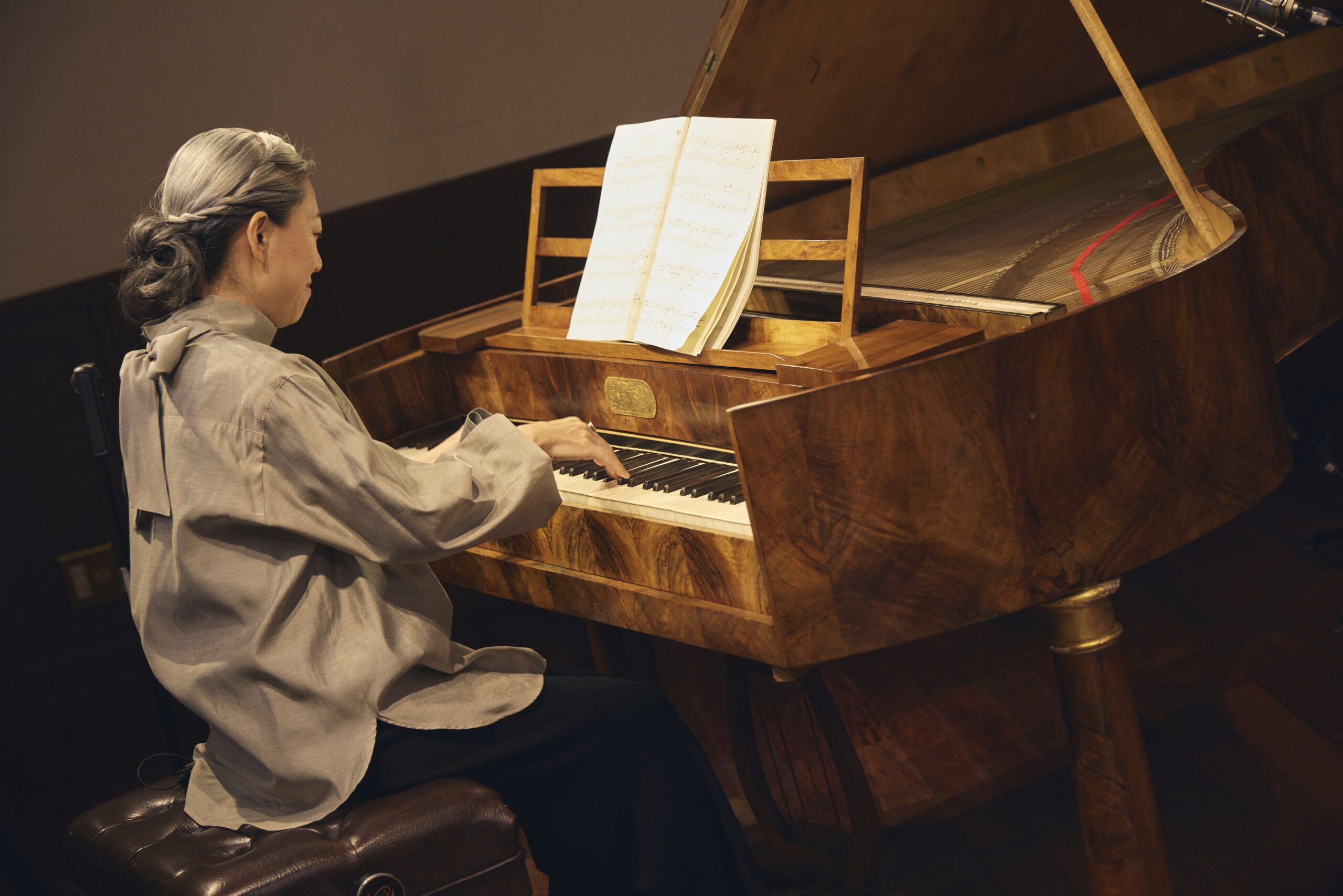
この曲が作曲された1911年〜1912年は、すでに現代のピアノが台頭していた時代です。セヴラックは楽譜に「ソルディーノ(弱音で)」と指示を書き込みました。 今日私が弾いているのは、それより約100年前に作られた1825年ウィーン製のフォルテピアノです。実はこの楽器には、セヴラックが想像したであろう「古いオルゴール」の響きを作り出す、特別な秘密があります。
それが、現代のピアノには受け継がれなかった「モデレーター」というペダルです。
「弱音」の中に存在する、いくつもの層(レイヤー)
現代のピアノにもある「ウナ・コルダ」というペダルは、鍵盤全体を横にスライドさせ、ハンマーが打つ弦の数を減らすことで音量を下げます(この楽器にもその機能はついています)。 しかし「モデレーター」は全く別の仕組みです。ペダルを踏むと、弦とハンマーの間に「フェルト」がスライドして入り込みます。ハンマーが弦を直接打たないため、極めてソフトで幻影のような音色が生まれるのです。
この時代のフォルテピアノは鍵盤が非常に浅く、指のタッチだけで音色を変えることには限界があります。しかし、このモデレーターを組み合わせることで、「ピアノ(弱音)」という小さな音量の中に、いくつもの豊かな「層(レイヤー)」を生み出すことができるのです。
セヴラックは、想像力を掻き立てる昔の懐かしい音色を探求していました。 もし現代のピアノでこの曲を弾くとしても、今日この美しい歴史的楽器を通して「真の弱音」のメカニズムを探求できたことは、私の中に明確な音のコンセプトを与えてくれました。
失われたアンティークの音色が誘う、繊細な記憶の旅をお楽しみください。
【Layers of Lost Softness and Eternal Sparkle: Séverac’s “When the Old Music Boxes Chime” and the Secret of the 1825 Fortepiano】
Hello everyone, this is Megumi Tanno.
Today I am performing Déodat de Séverac’s “Quand sonne l’heure des vieilles boîtes à musique” (When the Old Music Boxes Chime) from his suite En Vacances (Holidays), Book 1. This piece, which gently evokes days gone by, perfectly embodies the theme of my journey: “Timeless Nostalgia.”
Droplets of Life Flowing Deep into the Heart
The gentle rhythm of a cradle evokes distant memories. All life events converge into a single flow, drifting deep into one’s heart. How shining, mysterious, and attractive the river’s color appears there! In this never-ending flow, corresponding with the rhythm of nature, droplets of life become part of the stream, sparkling for eternity.
Séverac’s “Sordino” and the Secret of the Viennese Piano
This piece was composed between 1911 and 1912, an era when the modern piano was already prominent. In the score, Séverac marked “Sordino” (with a mute/softly). Today, I am playing a Viennese fortepiano built in 1825, nearly a century before the piece was written. This historical instrument holds a special secret capable of creating the exact “old music box” sound Séverac must have imagined.
That secret is a pedal called the “Moderator,” a mechanism that was unfortunately lost in the evolution of the modern piano.
Layers Hidden Within “Piano” (Softness)
Modern pianos have an “Una Corda” pedal, which shifts the keyboard sideways so the hammers strike fewer strings, reducing the volume (this 1825 fortepiano also has this function). However, the “Moderator” works entirely differently. When pressed, a layer of felt slides directly between the hammers and the strings. Because the hammers do not strike the strings directly, it produces an extremely soft, ethereal, and phantom-like tone.
Fortepianos of this era have very shallow keybeds, limiting how much a pianist can alter the tone through finger touch alone. Yet, by engaging the Moderator pedal, we can discover countless rich “layers” hidden within a single dynamic of piano (softness).
Séverac was searching for a sound that sparked the imagination, a nostalgic tone from the past. Even if I were to play this piece on a modern piano, having the precious opportunity to explore the true concept of “Sordino” on this beautiful antique instrument has given me a crystal-clear understanding of the sound he was aiming for.
I hope you enjoy this delicate journey into memory, guided by the antique sounds of the past.