News
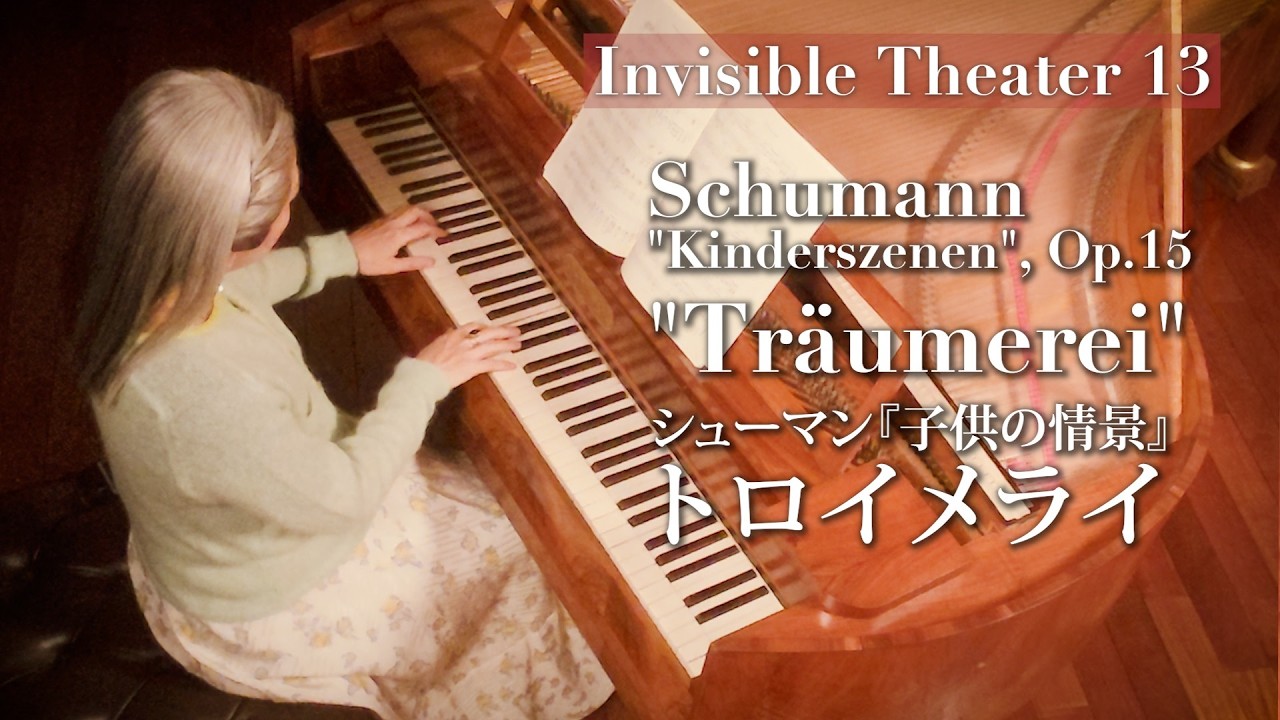
【解説トーク】シューマン『子供の情景』第7曲「トロイメライ」:白昼夢の真実と「今ここ」へのグラウンディング|Schumann Kinderszenen 7: “Träumerei”
『Invisible Theater(見えない劇場)』シリーズ、本編レコーディングはいよいよ第7曲、全てのピアノ曲の中で最も有名と言っても過言ではない、ロベルト・シューマンの『子供の情景(Kinderszenen)作品15』より「トロイメライ(Träumerei)」をお届けします。
タカギクラヴィア株式会社様が所蔵する歴史的フォルテピアノ「ヨハン・クレーマー(Johann Krämer)」(1825年ウィーン製、80鍵、4本ペダル、ピッチ430Hz)の温かな響きと共に、深い精神の旅へとご案内します。
■ 「白昼夢(Daydream)」と遠くへ向かう魂
「トロイメライ」という言葉は、日本語でもそのまま発音されますが、明治大学の関口教授から学んだように、あえて別の言葉に翻訳するならば「白昼夢(Daydream)」となります。夜眠っている時ではなく、昼間に物思いにふけり、深く考えを巡らせている状態です。
ドイツ・ロマン主義の核心には、人間の魂が「どこかとても遠くへ行きたがる」という性質があります。愛する人が物理的に隣にいなくても、深く想うことで心はその人のすぐ近くに存在できる。この曲には、そんな想像力の自由な旅が描かれています。
■ 「Nowhere(どこにもない場所)」と「Now Here(今ここ)」
しかし、ただ空中に漂うだけでは音楽になりません。どこか遠くへ想いを馳せる一方で、それと拮抗する力として、演奏者は強烈に「地に足をつける(グラウンディング)」必要があります。
「Nowhere(どこにもない場所)」という単語は、区切る位置を変えれば「Now Here(今ここ)」になります。私が「今、ここにいる」と強く感じ、大地と繋がって初めて、遠くの夢を見ることができるのです。
■ モーツァルトの肖像画と「No Excess(過剰さがないこと)」
この曲を美しく、そして温かい音で弾くために、私はモーツァルトの肖像画から多くのインスピレーションを得ました。彼の肩や腕全体がいかにスムーズに、無理なくエネルギーを鍵盤へ伝えている。指先だけではなく、「全宇宙」のような腕全体、特に「肘(エルボー)」を解放することが鍵となります。
また、クララ・シューマンの演奏は常に「No Excess(過剰さがない)」ものでした。不要なエネルギーを手放し、必要な時だけ力を使うことで、音が丸く温かくなるのです。
■ 完璧さではなく「真実」を弾く
オリンピックの舞台に立つ選手たちのように、最終的に最も大切なのは自分自身を信じ、楽しむことです。この録音でも、私は「完璧さ」や「ミスのない正しさ」を求めたのではありません。
音と音楽を通して、私にとっての「真実(Truth)」に焦点を当てました[cite: 2]。歴史的楽器が奏でる「今ここ」にある真実の響きを、皆様と共有できれば幸いです。
▼ 動画本編はこちらからご覧いただけます
https://youtu.be/WfCmTof0s4c
■ [Essay] Schumann’s “Träumerei”: The Truth of the Daydream and Grounding in the “Now Here”
For the seventh installment of our Invisible Theater recording series, we present No. 7, “Träumerei” (Dreaming), from Robert Schumann’s Kinderszenen Op. 15—arguably one of the most famous piano pieces in the world.
Accompanied by the warm resonance of the historical 1825 Johann Krämer fortepiano (Vienna; 80 keys, 4 pedals, 430Hz) from the Takagi Klavier collection, we invite you on a profound spiritual journey.
■ “Daydream” and the Soul Yearning to Go Far
The word “Träumerei” is used phonetically in Japanese as well, but as I learned from Professor Sekiguchi of Meiji University, if we were to translate it differently, it means “Daydream”. It is not about dreaming at night, but rather being lost in thought during the day.
At the core of German Romanticism is the human soul’s desire to go somewhere very far. Even if a beloved person is not physically next to you, by thinking of them deeply, your heart is closer to them. This piece depicts such a free journey of the imagination.
■ “Nowhere” and “Now Here”
However, simply floating in the air does not make music. While letting our thoughts drift far away, as a counteracting force, the performer must be intensely “grounded”.
The word “Nowhere” becomes “Now Here” depending on where you divide it. It is only when I strongly feel that “I am here now” and connect with the earth that I can truly dream of faraway places.
■ Mozart’s Portrait and “No Excess”
To play this piece beautifully and with a warm sound, I drew much inspiration from Mozart’s portraits. I observed how smoothly and effortlessly his shoulders and entire arms transmitted energy to the keys. The key is to free not just the fingertips, but the entire arm like a “whole universe,” especially the elbow.
Furthermore, Clara Schumann’s playing was always characterized by “No Excess”. By releasing unnecessary energy and using it only when needed, the sound becomes beautifully round and warm.
■ Playing the “Truth” Rather Than Seeking Perfection
Much like athletes at the Olympic Games, what matters most in the end is trusting and enjoying yourself. In this recording, I did not seek “perfection” or “correctness without mistakes”.
Instead, I focused on my own “Truth” through the sound and the music. I hope to share this true resonance of the “Now Here,” brought to life by this historical instrument, with all of you.
▼ Watch the full video here:
https://youtu.be/WfCmTof0s4c