News
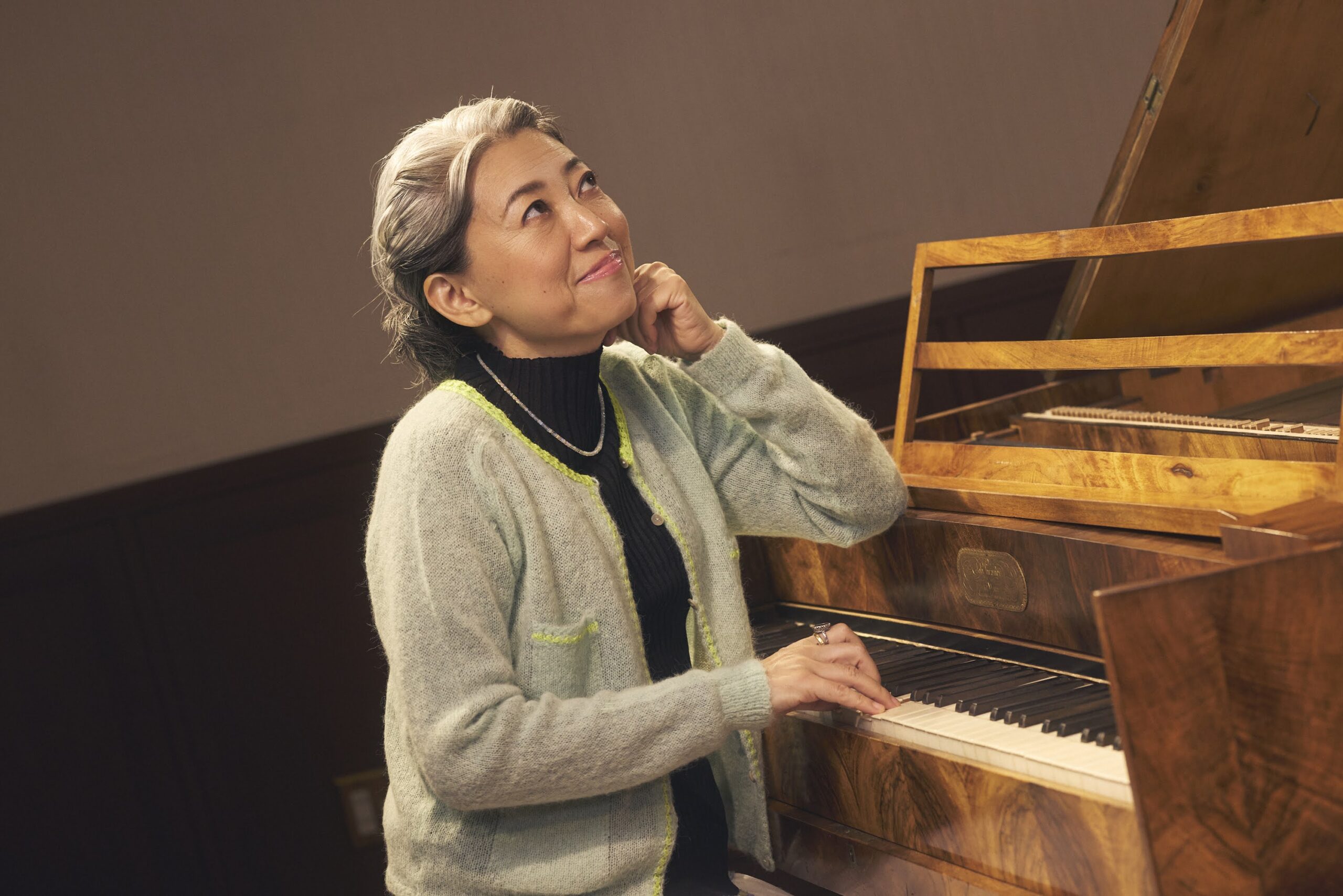
今週は1825年製のヨハン・クレーマー作フォルテピアノで、デオダ・ド・セヴラックの『休暇の日々から』第1集より「ミミは侯爵夫人の扮装をする」をお届けします。
少女の変身願望と、束の間の魔法
これは、小さな女の子「ミミ」が大人の女性(侯爵夫人)に憧れて背伸びをする物語です。 単に「大人」になりたいのではなく、煌びやかさ、気品、そして自信に満ち溢れた姿など、今の自分には到底手の届かない【なにか】を持っている女性に変身してみたいという純粋な願望が描かれています。
踊るような三拍子のリズムに乗って、中間部では彼女が「大人の女性」としての自信に満ちた振る舞いを見せます。しかし、その魔法の時間はいつも束の間。音楽が最初と同じメロディーに戻る時、彼女はまた元の小さな姿へと引き戻されます。 その小さな姿は、まるでゲーテが描いた少女「ミニヨン」のように、胸の奥に何か秘密を抱えているかのようにも感じられます。
「タイムレス・ノスタルジア」の本当の意味
さて、なぜ私がこのプログラム全体に『タイムレス・ノスタルジア(時代を超越した郷愁)』というタイトルを付けたのか。その真の理由がここにあります。
セヴラックは、この曲集の冒頭を「シューマンへの祈り」という曲から始めました。そこには明らかに、シューマンの傑作『子供の情景(作品15)』へのオマージュと深い関連性が存在します。
「今子供である私が、大人のように見えたい」と未来へ憧れる心。 「大人になった私が、もう一度子供時代に戻りたい」と過去を懐かしむ心。
ノスタルジアとは、単にタイムマシンのように過去へ戻ることだけを意味しません。過去へも戻り、そして未来へも行く。時間をストレッチ(伸縮)し、時空を極めて自由に行き来すること。
これこそが、音楽が私たちにもたらす「時を超えた郷愁」の正体なのです。歴史的楽器が紐解く、自由で不思議な時間の旅をお楽しみください。
【Traveling Freely Between Future and Past: Séverac’s “Mimi Dresses Up as a Marquise” and the True Meaning of Timeless Nostalgia】
Hello everyone, this is Megumi Tanno. Today, I am performing Déodat de Séverac’s “Mimi se déguise en ‘Marquise'” (Mimi Dresses Up as a Marquise) from his suite En Vacances, played on an original 1825 fortepiano.
A Girl’s Desire to Transform and a Fleeting Magic
This is the story of a little girl named Mimi who yearns to be a grown woman—a Marquise. She doesn’t just want to be an “adult.” She wants to embody the glamour, the elegance, and the overflowing confidence that she currently lacks. She wants to transform into a woman who possesses that elusive something.
Riding on a dancing 3/4 waltz rhythm, the middle section reveals her acting with the absolute confidence of a grown woman. But this magical time is always fleeting. When the music returns to the opening melody, she is pulled right back into her small, childlike reality. Listening to her return to her small self, I am reminded of Goethe’s character “Mignon”—a little girl who seems to harbor a profound secret deep within her heart.
The True Meaning of “Timeless Nostalgia”
This piece reveals exactly why I named this entire program “Timeless Nostalgia.”
It is no coincidence that Séverac opened this suite with a piece titled “Invocation à Schumann” (Invocation to Schumann). There is a clear homage to and deep connection with Schumann’s masterpiece, Kinderszenen (Scenes from Childhood), Op. 15.
Think of the different perspectives: A child looking forward, wishing, “I want to look like an adult.” And conversely, an adult looking backward, wishing, “I want to return to my childhood.”
Nostalgia does not merely mean acting as a time machine to travel back into the past. It means stretching time itself. It means traveling to the future, and returning to the past. Moving with absolute freedom through the dimensions of time. This is the true identity of the “timeless nostalgia” that music brings us. I invite you to enjoy this free and mysterious journey through time, guided by the historical fortepiano.