News
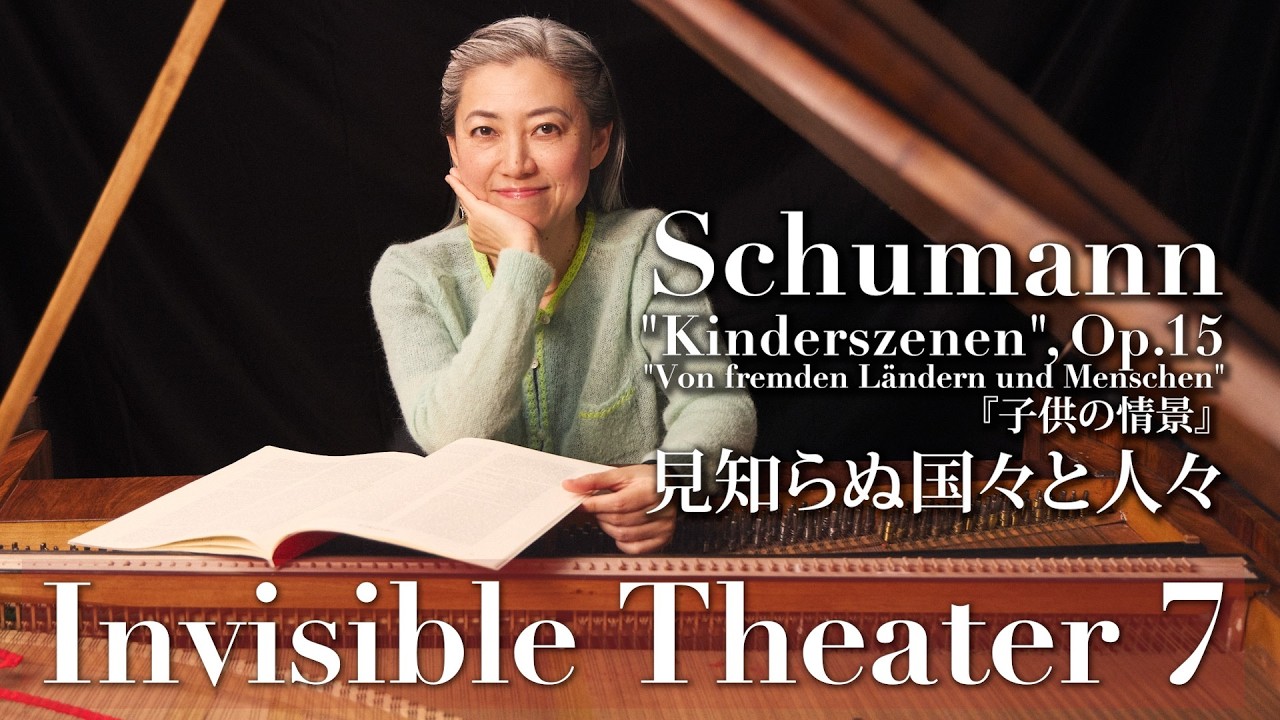
【解説トーク】シューマン「見知らぬ国々と人々」:音の歴史と真実。私の物語が「あなたの物語」になる瞬間|Schumann Kinderszenen 1: “My Truth”
『Invisible Theater(見えない劇場)』シリーズ、いよいよ本格的なレコーディング演奏がスタートしました。
記念すべき第1曲目は、ロベルト・シューマンの『子供の情景(Kinderszenen)作品15』より第1曲「見知らぬ国々と人々(Von fremden Ländern und Menschen)」です。
今回の収録には、タカギクラヴィア様が所蔵する、貴重な歴史的フォルテピアノ「ヨハン・クレーマー(Johann Krämer)」(1825年ウィーン製、80鍵、4本ペダル、ピッチ430Hz)を使用しています。美しく調律・メンテナンスされた奇跡のような響きをお聴きください。
■ 知識や「正しさ」だけでは音楽にならない
この収録に向けて、私はウィーン原典版(Wiener Urtext Edition)を読み込み、クララ・シューマンが父ヴィークからいかに優れたテクニックを学んだかなど、多くの歴史的背景を勉強しました。
しかし、ステージに立つ音楽家にとって、知識に基づいた「良い子(Good Girl)」として、ただ「正しく(Correct)」弾くことは、決して音楽のゴールではありません。
人生においても音楽においても最も難しく、そして最も重要なのは「常に自分自身であること」。すなわち、その瞬間の自分にとっての「真実(Wahrheit)」を表現することなのです。
■ 「詩人は語る」の詩人とは誰か?
全13曲からなる『子供の情景』の最後には、「詩人は語る(Der Dichter spricht)」という曲が置かれています。では、この詩人とは一体誰なのでしょうか?シューマン自身でしょうか?
私は、この詩人は「私自身」でもあると考えています。この曲集は、私の感情の旅(Emotional Journey)を映し出す鏡のような存在です。
ドイツ・ロマン派に特徴的な「ビルドゥングスロマン(自己成長の物語)」のように、純粋な音から始まり、過去の追憶(Reminiscence)を内包しながら、旅を経て変化していく。バッハの『ゴルトベルク変奏曲』が、最後のアリアで同じメロディに戻りながらも別人のように成長しているのと同じように、この作品も自己成長の旅なのです。
■ 私の物語が、あなたの物語になる瞬間
美しい歴史的楽器を弾き、歴史を深く学ぶこと。それは素晴らしいことですが、それだけでは十分ではありません。「私の物語(My Story)」がそこに乗っていなければならないのです。
こうしてYouTubeというメディアを通して、まだ直接お会いしたことのない地球上の誰かに音楽を届けるとき、私の物語は「あなたの物語(Your Story)」へと姿を変えます。音楽という見えない次元を通して、私たちはお互いに新しい発見をし、この世界に色鮮やかな色彩を加えていくことができると信じています。
▼ 動画本編はこちらからご覧いただけます
https://youtu.be/M8fLeBMf0go
■ [Essay] Schumann’s “Of Foreign Lands and Peoples”: The Truth of Sound and the Moment My Story Becomes Yours
The Invisible Theater series has finally begun its full-scale recording sessions.
The memorable first piece is “Von fremden Ländern und Menschen” (Of Foreign Lands and Peoples) from Robert Schumann’s Kinderszenen (Scenes from Childhood) Op. 15.
For this recording, I had the privilege of using a beautifully maintained historical fortepiano by Johann Krämer (Vienna, 1825; 80 keys, 4 pedals, 430Hz) from the Takagi Klavier collection. Please enjoy the miraculous resonance of this exquisitely tuned instrument.
■ Knowledge and “Correctness” Alone Do Not Make Music
In preparing for this performance, I studied the Wiener Urtext Edition extensively, reading about how Clara Schumann acquired her brilliant technique from her father, Friedrich Wieck, along with other historical contexts.
However, for a musician on stage, playing “correctly” as a “good girl” based on intellectual knowledge is never the ultimate goal.
The most important—and difficult—challenge in both life and music is to always “be yourself.” It is about expressing your own “Wahrheit” (truth) of that very moment.
■ Who is the “Poet” in The Poet Speaks?
The 13th and final piece of Kinderszenen is titled “Der Dichter spricht” (The Poet Speaks). But who exactly is this poet? Is it Schumann himself?
I believe that this poet is also “me.” This collection acts as a mirror reflecting my own emotional journey.
Much like the “Bildungsroman” (a novel of personal growth) typical of German Romanticism, it begins with pure sound, encompasses reminiscences of the past, and transforms through the journey. Just as Bach’s Goldberg Variations return to the same aria at the end—yet the player is entirely transformed—this work is also a profound journey of self-growth.
■ The Moment My Story Becomes Your Story
Playing a beautiful historical instrument and studying history deeply are wonderful things, but they are not enough. “My story” must also be present.
When I share this music through YouTube with someone on this planet I have not yet met face-to-face, my story transforms into “your story.” I trust that through the invisible dimension of music, we can discover something new in each other and add vivid, colorful hues to this world.
▼ Watch the full video here:
https://youtu.be/M8fLeBMf0go