News
【Music Doc】ピアノの心臓部へ。オランダの古楽器修復家ハイスさんのアトリエ見学 Vol.2
Inside the Heart of the Piano: Visiting Restorer Gijs’s Atelier Vol.2
皆様こんにちは、鍵盤奏者の丹野めぐみです。
欧州での音楽と暮らしをお届けするドキュメンタリーシリーズ『Where Music is Born』。
今回は、オランダにある親友の古楽器ピアノ修復家、ハイス・ヴィルデロム(Gijs Wilderom)さんのアトリエ見学の第2弾をお届けします。
前回の動画では語り尽くせなかった、歴史的フォルテピアノの音色を決定づける「職人の秘密」と、その緻密な手仕事に深く迫ります。
Hello everyone, I’m keyboardist Megumi Tanno.
Welcome to another episode of my documentary series, “Where Music is Born,” where I share my musical life in Europe.
In this episode, we continue our fascinating tour of the atelier of my dear friend and master piano restorer, Gijs Wilderom, in the Netherlands.
We dive even deeper into the secrets hidden within his workshop, exploring the meticulous craftsmanship that defines the sound of historical fortepianos.
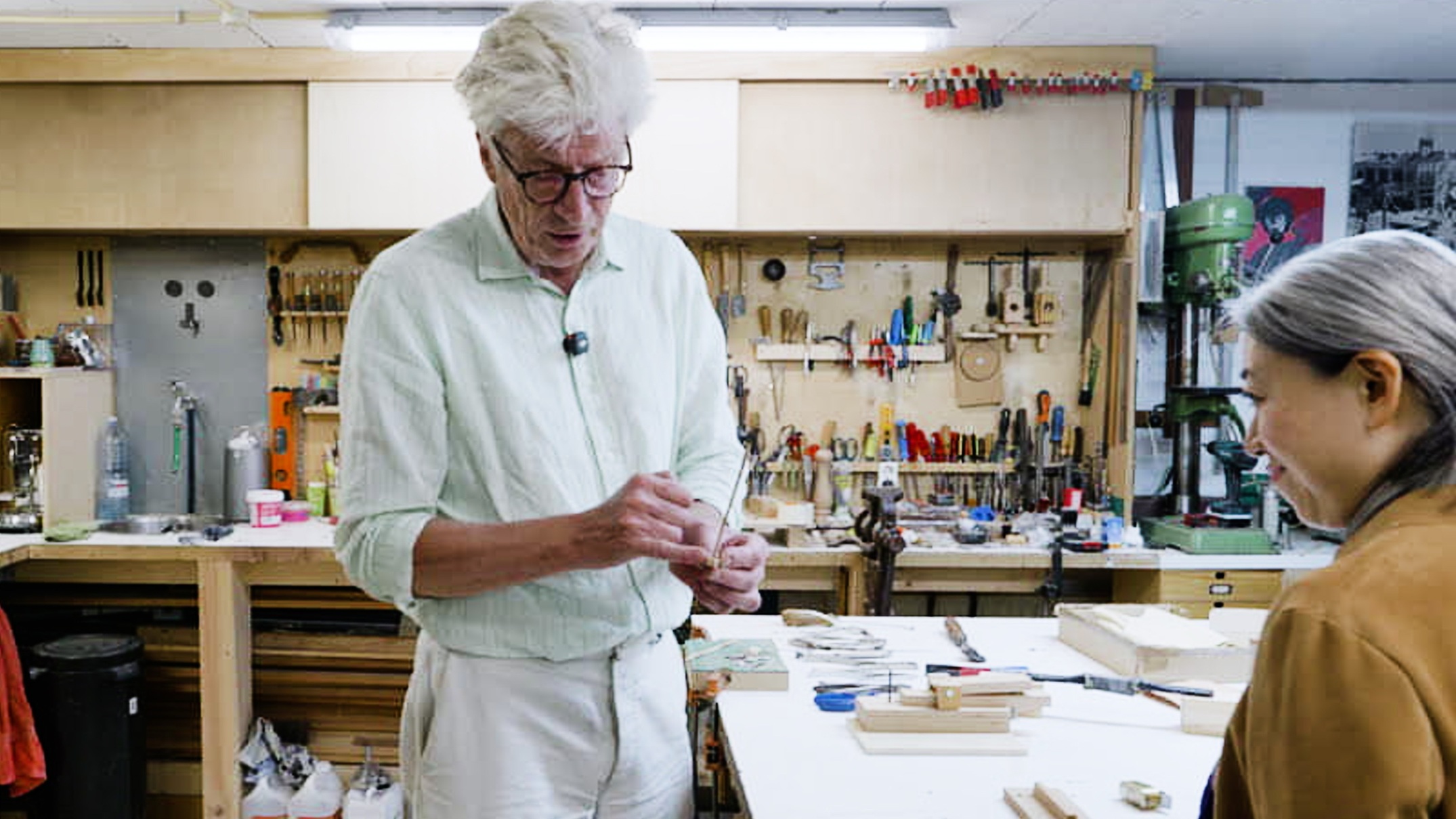
「ピアノの心臓」を創る〜ハンマーと革の魔法〜
Creating the “Heart of the Piano”: The Magic of Hammers and Leather
アトリエの奥でハイスさんが見せてくれたのは、1793年製のスクエアピアノと、その音色を生み出す極小のハンマーヘッドの修復作業でした。
「革とハンマーヘッド。それがピアノの心臓です。ピアノを台無しにすることも、最高のものにすることもできるのです」と彼は語ります。
高音部には0.6ミリ、低音部には1.2ミリと、オーストリア産の鹿革をコンマ数ミリ単位で調整しながら貼り合わせていく作業は、まさに神業。現代の分厚いフェルトのハンマーとは全く異なる、丸く女性的で包み込むような「あの時代の響き」は、この繊細な革の調整から生まれているのです。
Deep inside the atelier, Gijs showed us a square piano from 1793 and the delicate restoration of its tiny hammer heads, which are crucial for producing its unique sound.
“The leather and the hammer heads. That is the heart of the piano,” he explained. “You can break a piano, or you can make it fantastic.”
Watching him carefully adjust the Austrian deer leather—down to 0.6 millimeters for the treble and 1.2 millimeters for the bass—was like witnessing magic. The warm, feminine, and embracing sound of that era, so different from the thick felt hammers of modern pianos, is born from this precise adjustment of the leather.


時を超える「にかわ」の存在
The Timeless Presence of Bone Glue
修復において欠かせないのが「にかわ(Bone glue)」という自然素材の接着剤です。
ハイスさんによれば、にかわは熱や水分で溶けるため、200年前の楽器であっても「木を壊すことなく再び分解して修復できる」という最大の利点があります。
「人類は2000年もこの接着剤を使ってきました。日本でも同じですよね。自然な素材でなければならないのです」。歴史的な楽器を後世へ受け継ぐための、先人たちの知恵と敬意がここには詰まっています。
An essential element in restoration is the use of natural adhesive known as bone glue.
According to Gijs, the greatest advantage of bone glue is that it melts with heat and moisture, allowing a 200-year-old instrument to be dismantled and repaired again without breaking the wood.
“Humankind has used bone glue for two thousand years. In Japan too, for centuries. It has to be natural,” he said. This is a profound testament to the wisdom and respect of our ancestors, ensuring that historical instruments can be passed down to future generations.
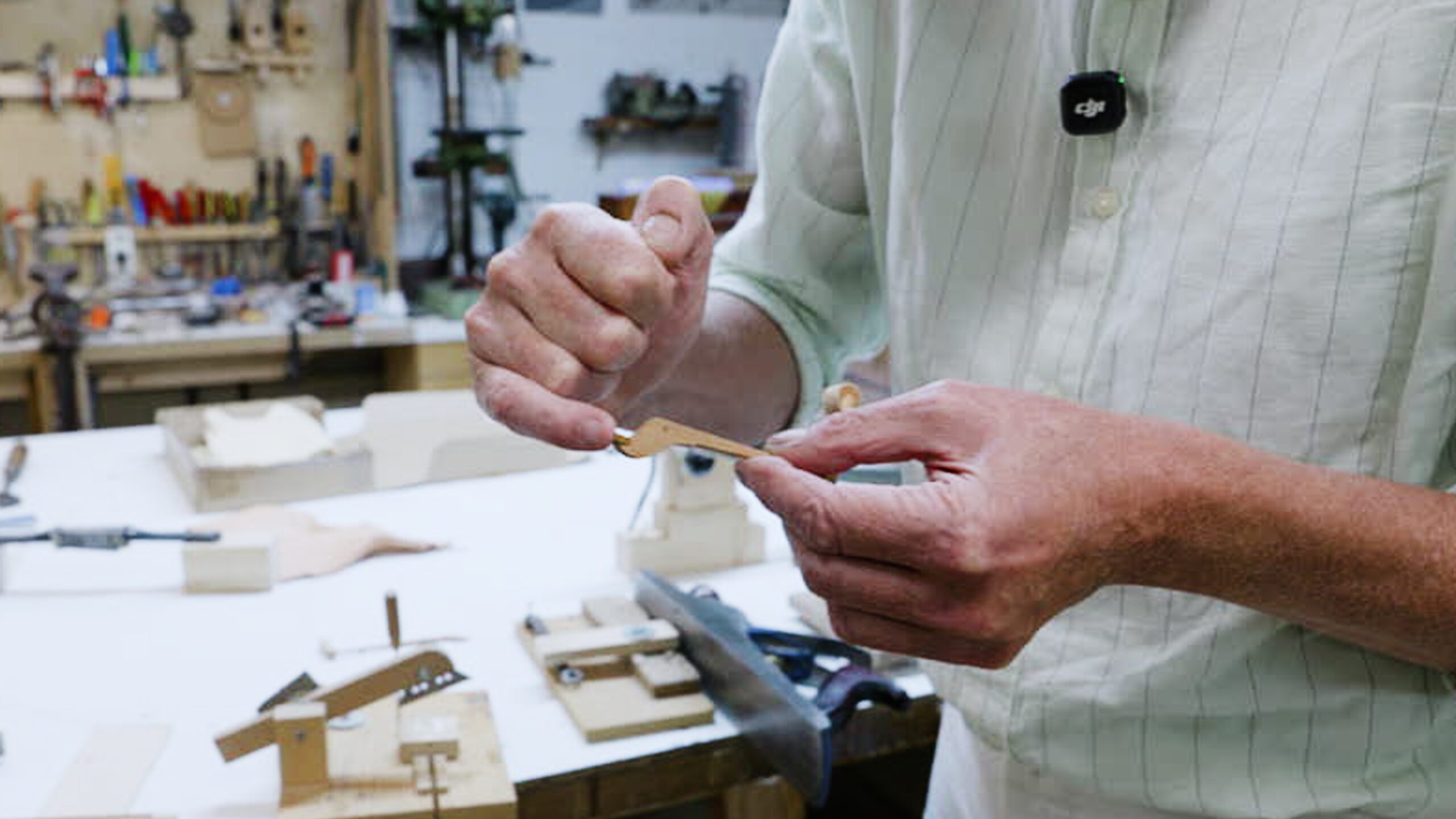
オランダの工房で活躍する「日本の道具たち」
Japanese Tools at Work in a Dutch Atelier
今回の見学で私が最も驚き、そして誇らしく感じたのは、オランダのこの工房に「日本の道具」が溢れていたことです。
ハイスさんは、和ばさみやミツトヨのノギス(精密測定器)、さらには日本のノコギリやカンナを愛用しています。「西洋のノコギリは押して切るが、日本のノコギリは引いて切る。もうヨーロッパのノコギリでは切れません。日本のノコギリは本当に素晴らしい」と語るハイスさん。1本の刃を丁寧に砥石で研ぎ澄まし、あらゆる部品を生み出してゆく職人の姿に、国境を越えた「手仕事への共鳴」を感じました。
What surprised and made me most proud during this visit was seeing so many “Japanese tools” being used in this Dutch workshop.
Gijs lovingly uses Japanese scissors, Mitutoyo calipers (precision measuring instruments), and traditional Japanese saws and planes. “In the West you push, but this is Japanese cutting—pulling. I cannot cut with a normal European saw anymore. Japanese saws are always good,” he shared. Seeing a craftsman meticulously sharpen a single blade on a whetstone to create every single part was a beautiful moment of cross-cultural resonance in craftsmanship.

音を育む「響板」の秘密と、失われた部品の創造
The Secret of the Soundboard and Creating Lost Parts
さらに奥へ進むと、響板(Soundboard)を乾燥させるための自家製の除湿チェンバーや、壁一面に掛けられた無数の「型(Jigs)」がありました。
現代のピアノとは異なり、1840年以前の歴史的ピアノの部品は、買いたくてもどこにも売っていません。だからこそ、木を削り、形を作り、失われた部品を自らの手でゼロから生み出さなければならないのです。
途方もない時間と労力がかかる作業ですが、ハイスさんはそれを心から楽しみ、ピアノの魂を蘇らせています。
Moving further inside, we saw a homemade dehumidifying chamber for drying the soundboard and a wall covered in countless molds, or “jigs.”
Unlike modern pianos, parts for historical pianos built before 1840 simply cannot be bought anywhere. Therefore, a restorer must carve the wood, shape the pieces, and create the lost parts entirely from scratch.
It is a process that requires an immense amount of time and effort, but Gijs genuinely enjoys it, breathing life back into the soul of the piano.

最後に / Conclusion
「ピアノの修復家とは、ピアノのお医者さんのようなものですね」と私が尋ねると、彼は優しく微笑んで頷きました。
彼の手によって蘇った200年前のピアノたちは、再び現代の私たちの心に、美しく、そして温かく語りかけてくれます。
前編・後編にわたってお届けしたアトリエ・ツアー、ぜひ映像でその息遣いと素晴らしい音色をお楽しみください。
When I asked him, “You are like a doctor for pianos, aren’t you?” he smiled gently and nodded.
The 200-year-old pianos, brought back to life by his hands, speak to our modern hearts once again with their beautiful and warm voices.
Please enjoy the full atelier tour, spread across two episodes, and experience the breathing presence and magnificent sound of these historical instruments through the videos below.
🎥 ドキュメンタリー本編はこちらからご視聴いただけます
Watch the full documentary episodes here:
▼ 後編(Vol.2): ピアノの心臓「革とハンマー」古楽器修復家のアトリエ
Part 2 (Vol.2): Master Piano Restorer Vol.2: Anatomy of a Fortepiano
https://youtu.be/sRfe6rQXunE
▼ 前編(Vol.1): ウィーン式アクションの秘密と修復家のアトリエ
Part 1 (Vol.1): Mozart’s Era Brought to Life: Viennese Fortepiano Restoration
https://youtu.be/HitFvqM9NgA